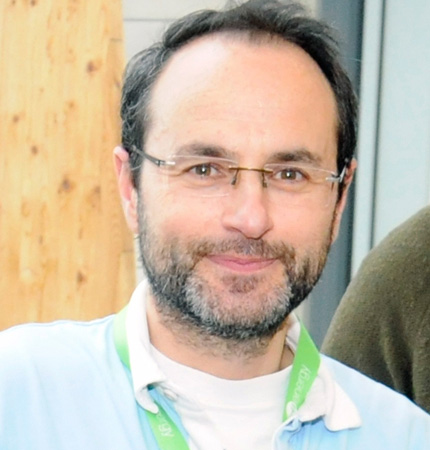
Ben is a researcher who has worked for over thirty years on the ecology of marine mammals, fish and birds in relation to offshore industrial activities. He currently focusses on the interactions between large marine animals and energy structures (wind, wave, tidal-stream, oil and gas devices).
His research aims to understand the interactions enough to develop effective monitoring and mitigation tools that will facilitate regulators to take appropriate consenting decisions and industry to reduce their impacts. Learning what marine vertebrates actually do in the sea and how their behaviour is adapted to their prey, competitors, predators and habitats is of key importance.
His work has taken him to many different coastal seas with southeast Alaska and the west of Scotland being among his favourites.
As an ecologist, his research seeks to bridge the gaps between biology, oceanography and engineering.
He is currently the UHI Associate Director for Science and Research (interim).
Current projects
STREAM: Assessing the practicality of using autonomous robotic sensors to monitoring oil and gas structures after they are decommissioned. Principal Investigator. Funded by NERC. 2017-18
MERIKA (Marine Energy Research Innovation and Knowledge Accelerator): Steering committee. Funded by EU FP7. 2014-17
LEAP: Influence of low frequency ADDs on cetaceans in Scottish coastal waters. Principal Investigator. Funded by the Scottish Aquaculture Research Forum. 2016-17
CEFOW (Clean Energy From Ocean Waves): Ethical advisor. Funded by EU H2020. 2015-20
INNO-MPP (Integrated, MultiPurpose Offshore Floating Device): A UK, Chinese collaboration to investigate the novel challenges presented by co-locating different offshore industries (wind/wave converters with aquaculture). SAMS-Principal Investigator. Funded by EPSRC. 2017-20
VertiBase: Ensuring lessons learnt from project Response are known and used by the renewables sector. SAMS-Principal Investigator. Funded by NERC
The Bryden Centre PhD Programme. UHI Principal Investigator. Funded by EU INTERREG VA. 2017-22
UHI Energy Innovation Support Office. Principal Investigator. Funded by the Scottish Funding Council. 2017-19
Highlight past projects
Response: Understanding How Marine Renewable Device Operations Influence Fine Scale Habitat Use & Behaviour of Marine Vertebrates. Funded by NERC and DEFRA. 2011-15
EBAO: Optimising Array Form for Energy Extraction and Environmental Benefit. Funded by NERC and DEFRA. 2011-13
MaRVEN: Environmental Impacts of Noise, Vibrations and Electromagnetic Emissions from Marine Renewables. Funded by the EU. 2013-16
Peer-reviewed publications
Van Geel NCF, Risch D, Benjamins S, Brook T, Culloch RM, Edwards EWJ, Stevens C and Wilson B (2022) Monitoring cetacean occurrence and variability in ambient sound in Scottish offshore waters. Frontiers in Remote Sensing 3: 934681. https://doi.org/10.3389/frsen.2022.934681
Van Geel N, Marr T, Hastie G, Wilson B (2022) First reported observation of an apparent reproductive bottlenose x Risso's dolphin hybrid. Aquatic Conservation: Marine and Freshwater Ecosystems, 1-7. https://doi.org/10.1002/aqc.3872
Serpetti N., Benjamins S., Brain S., Collu M., Harvey B.J., Heymans J.J., Hughes A.D., Risch D., Rosinski S., Waggitt J.J. and Wilson B. (2021). Modeling Small Scale Impacts of Multi-Purpose Platforms: An Ecosystem Approach. Front. Mar. Sci. 8:694013. https://doi.org/10.3389/fmars.2021.694013
Horne N, Culloch RM, Schmitt P, Lieber L, Wilson B, Dale AC, Houghton JD, Kregting LT (2021) Collision risk modelling for tidal energy devices: A flexible simulation-based approach. Journal of Environmental Management, 278, p.111484 https://doi.org/10.1016/j.jenvman.2020.111484
Abhinav, K.A., Collu, M., Benjamins, S., Cai, H., Hughes, A., , Bod, J., Jude, S., Leithead, W., Lin, C., Liu, H., Recalde-Camacho, L., Serpetti, N., Sun, K., Wilson, B., Yue, H., Zhou, B.Z., 2020. Offshore multi-purpose platforms for a Blue Growth: a technological, socio-economic, and environmental review. Science of the Total Environment, 734: 138256. https://doi.org/10.1016/j.scitotenv.2020.138256
Hutchison ZL, Green DH, Burrows MT, Jackson AC, Wilson B, Last KS (2020) Survival strategies and molecular responses of two marine mussels to gradual burial by sediment. Journal of Experimental Marine Biology and Ecology 527: 151364 https://doi.org/10.1016/j.jembe.2020.151364
Risch D, van Geel N, Gillespie D, Wilson B (2020) Characterisation of underwater operational sound of a tidal stream turbine. The Journal of the Acoustical Society of America 147 (4): 2547-2555 DOI: https://doi.org/10.1121/10.0001124
Findlay, C.R., Ripple, H.D., Coomber, F., Froud, K., Harries, O. van Geel, N.C.F., Calderan, S.V., Benjamins, S., Risch, D., Wilson, B. (2018). Mapping widespread and increasing underwater noise pollution from acoustic deterrent devices. Marine Pollution Bulletin, 135. pp 1042-1050. https://doi.org/10.1016/j.marpolbul.2018.08.042
Risch D, Wilson B, Lepper P. 2017. Acoustic Assessment of SIMRAD EK60 High Frequency Echo Sounder Signals (120 & 200 kHz) in the Context of Marine Mammal Monitoring. Scottish Marine and Freshwater Science Vol 8 No 13, 24pp. DOI: 10.7489/1978-1
Hastie GD, Russell DJF, Lepper P, Elliott J, Wilson B, Benjamins S, Thompson, D. (2017) Harbour seals avoid tidal turbine noise: implications for collision risk. J Appl Ecol. doi:10.1111/1365-2664.12981
Benjamins, S., van Geel, N., Hastie, G., Elliott, J., & Wilson, B. (2016). Harbour porpoise distribution can vary at small spatiotemporal scales in energetic habitats. Deep Sea Research Part II: Topical Studies in Oceanography.
Gangloff, M. M., Edgar, G. J., & Wilson, B. (2016). Imperilled species in aquatic ecosystems: emerging threats, management and future prognoses. Aquatic Conservation: Marine and Freshwater Ecosystems.
Benjamins, S., Dale, A., van Geel, N., & Wilson, B. (2016). Riding the tide: use of a moving tidal-stream habitat by harbour porpoises. Marine Ecology Progress Series, 549, 275-288.
Hutchison, Z. L., Hendrick, V. J., Burrows, M. T., Wilson, B., & Last, K. S. (2016). Buried Alive: The Behavioural Response of the Mussels, Modiolus modiolus and Mytilus edulis to Sudden Burial by Sediment. PloS one, 11(3), e0151471.
Wilson, B. (2016) Might marine protected areas for mobile megafauna suit their proponents more than the animals? Aquatic Conservation: Marine and Freshwater Ecosystems 26: 3-8.
Hastie, GD., Russell, DJF, Benjamins, S., Moss, S., B Wilson, and Thompson, D. (2016) Dynamic habitat corridors for marine predators; intensive use of a coastal channel by harbour seals is modulated by tidal currents. Behavioral ecology and sociobiology 70: 2161.
Benjamins, s., Dale, A., Hastie, G., Waggitt, J.J., Lea, M.-A., Scott, B.E. and Wilson, B. (2015). Confusion reigns? A review of marine megafauna interactions with tidal-stream environments. Oceanography and Marine Biology: An Annual Review.
Maclean IM, Inger R, Benson D, Booth CG, Embling CB, Grecian WJ, Heymans JJ, Plummer KE, Shackshaft M, Sparling C, Wilson B, Wright LJ, Bradbury G, Christen N, Godley BJ, Jackson A, McCluskie A, Nichols-Lee R and Bearhop S (2014). Resolving issues with environmental impact assessment of marine renewable energy installations. Front. Mar. Sci. 1:75. doi: 10.3389/fmars.2014.00075
Cheney, B., Corkrey, Durban, Grellier, Hammond, Islas-Villanueva, Janik, Lusseau, Parsons, Quick, Wilson and Thompson (In press) Long-term trends in the use of a protected area by small cetaceans in relation to changes in population status. Global Ecology and Conservation
Wilson B, PA Lepper, C Carter, SP Robinson (2014) Rethinking Underwater Sound-Recording Methods to Work at Tidal-Stream and Wave-Energy Sites. Marine Renewable Energy Technology and Environmental Interactions, 111-126. Springer.
LJ Wilson, MT Burrows, GD Hastie, B Wilson (2014) Temporal variation and characterization of grunt sounds produced by Atlantic cod Gadus morhua and pollack Pollachius pollachius during the spawning season Journal of fish biology 84 (4), 1014-1030.
Wilson, B., Benjamins, S., & Elliot, J. (2013). Using drifting passive echolocation loggers to study harbour porpoises in tidal-stream habitats. Endangered Species Research, 22(2), 125-143.
Miller, R.G., Hutchison, Z.L., Macleod, A.K., Burrows, M.T., Cook, E.J., Last, K.S., and Wilson, B. (2013). Marine renewable energy development: assessing the Benthic Footprint at multiple scales. Frontiers in Ecology and the Environment, 11:8, 433-440.
Cheney, B, Thompson, PM, Ingram, S.N., Hammond, P.S., Stevick, P.T., Durban, J.W., Culloch, R.M., Elwen, S.H., Mandlebreg, L., Janik, V.M., Quick, N.J., Islas-Villanueva, V., Robinson, K.P., Costa, M., Eisfeld, S.M., Walters, A., Phillips, C., Weir, C.R., Evans, P.G.H., Anderwald, P., Reid, R.J., Reid, J.B. & Wilson, B. (2013) Integrating multiple data sources to assess the distribution and abundance of bottlenose dolphins Tursiops truncatus in Scottish waters. Mammal Review. 43 (1), 71-88
Hughes AD, Brunner L, Cook EJ, Kelly MS, Wilson B (2012) Echinoderms Display Morphological and Behavioural Phenotypic Plasticity in Response to Their Trophic Environment. PLoS ONE 7(8):e41243.doi:10.1371/journal.pone.0041243
Fox, C, Harris, R, Sundby, S, Achterberg, E, Allen, J. I, Allen, J, Baker, A, Brussaard, CPD, Buckley, P, Cook, EJ., Dye, SR., Edwards, M, Fernand, L, Kershaw, P, Metcalfe, J, Osterhus, S, Potter, T, Sakshaug, E, Speirs, D, Stenevik, E, St. John, M, Thingstad, F & Wilson, B (2009) Transregional linkages in the north-eastern Atlantic - an `end-to-end' analysis of pelagic ecosystems. Oceanography and Marine Biology: an Annual Review 47: 1-76.
Fedak M, Wilson B and Pomeroy PP. 2009 Reproductive behavior. In: Encyclopedia of Marine Mammals p943 Academic Press ISBN(HB) 978-0123735539
Thompson, PM, Ingram, S, Lonergan, M, Northridge, S, Hall, A, Wilson B (2007) Climate change causing starvation in harbour porpoises? Biology Letters 3: 533-535
Hastie, GD, Wilson B. & Thompson PM. (2006) Diving deep in a foraging hotspot: acoustic insights into bottlenose dolphin dive depths and feeding behaviour. Marine Biology 148:1181-1188.
Lea M and Wilson B. (2006) Techniques for real-time, active tracking of sea lions. InA.W. Trites, S.K. Atkinson, D.P. DeMaster, L.W. Fritz, T.S. Gelatt, L.D. Rea, and K.M. Wynne (Eds.) Sea Lions of the World. 235-254 Alaska Sea Grant College Program ISBN(HB) 156612-105-1
Lusseau, D, Wilson, B. Hammond PS. Grellier, G. Durban, JW, Parsons, KM, Barton, TR, Thompson, PM. (2005) Quantifying the influence of sociality on population structure in bottlenose dolphins. Journal of Animal Ecology, doi: 10.1111/j.1365-2656.2005.01013.x
Mann, DA, Popper AN & Wilson B (2005) Herring hearing does not include ultrasound. Biology Letters.
Lusseau D, Williams R, Wilson B, Grellier K, Barton T, Hammond PS, Thompson PM (2004) Parallel influence of climate on the behaviour of Pacific killer whales and Atlantic bottlenose dolphins Ecology Letters 7:1068
Wilson B, Reid RJ, Grellier K, Thompson PM, Hammond PS (2004) Considering the temporal when managing the spatial: A population range expansion impacts protected areas based management for bottlenose dolphins. Animal Conservation. 7:331-338.
Hastie GH, Wilson B, Wilson LJ, Parsons KM, Thompson PM (2004) Functional mechanisms underlying cetacean distribution patterns: hotspots for bottlenose dolphins are linked to foraging. Marine Biology 144 397-403.
Hastie GH, Barton, TR, Grellier K, Hammond PS, Swift RJ, Thompson PM, Wilson B (2003) Distribution of small cetaceans within a candidate Special Area of Conservation; implications for management. Journal of Cetacean Research and Management 5 261-266.
Wilson, B, Batty R & Dill LM (2003) Pacific and Atlantic herring produce burst pulse sounds. Proceedings of the Royal Society of London: Biology Letters (DOI: 10.1098/rsbl.2003.0107).
Grellier K & Wilson B (2003) Bottlenose dolphins (Tursiops truncatus) in the Sound of Barra: A resident community off the Scottish west coast. Aquatic Mammals 29 378-382.
Grellier K, Hammond PS, Wilson B, Sanders-Reed CA & Thompson PM (2003) Use of photo-identification data to quantify mother-calf association patterns in bottlenose dolphins. Canadian Journal of Zoology, 81:1421-1427.
Hastie GD, Wilson B & Thompson PM (2003) Fine-scale habitat selection by coastal bottlenose dolphins; application of a new land-based video montage technique. Canadian Journal of Zoology, 81: 469-478.
Hastie GD, Wilson B, Tufft LH & Thompson PM (2003) Bottlenose dolphins increase breathing synchrony in response to boat traffic, Marine Mammal Science, 19: 74-84.
Wilson B & Dill LM (2002) Pacific herring respond to simulated odontocete echolocation sounds. Canadian Journal of Fisheries and Aquatic Sciences. 59: 542-553.
Read AJ, Urian KW, Wilson B & Waples DM (2003) Abundance of bottlenose dolphins in the bays, sounds and estuaries of North Carolina, USA. Marine Mammal Science, 19: 59-73.
MacLeod CD & Wilson B (2001) Did a beaked whale inspire the design of the Pictish beast? Tayside & Fife Archaeological Journal 7: 45-47.
Denardo C, Doherty M, Hastie G, Leaper R, Wilson B, Thompson PM (2001) A new technique for investigating variability in spatial relationships within groups of free-ranging cetaceans. Journal of Applied Ecology.
Harwood J & Wilson B (2001) Implications of developments on the Atlantic Frontier for marine mammals. Continental Shelf Research 21:1073-1093.
Thompson PM, Wilson B, Grellier K & Hammond PS (2000) Combining power analyses and population viability analyses to compare traditional and precautionary approaches to managing coastal cetaceans. Conservation Biology 14(5).
Wilson B, Grellier K, Hammond PS, Thompson PM & White G (2000) Changing occurrence of epidermal lesions in wild bottlenose dolphins. Marine Ecology Progress Series 205:283-290.
Wilson B, Arnold H, Bearzi G, Fortuna CM, Gaspar R, Ingram S, Liret C, Pribanic S, Read AJ, Ridioux V, Schneider K, Urian KW, Wells RS, Wood C, Thompson PM, & Hammond PS. (1999) Epidermal diseases in bottlenose dolphins: impacts of natural and anthropogenic factors. Proceedings of the Royal Society of London B., 266:1077-1083.
Wilson B, Hammond PS & Thompson PM (1999) Estimating size and assessing trends in a coastal bottlenose dolphin population. Ecological Applications 9:288-300.
Patterson, IAP, Reid, RJ, Wilson, B, Grellier, K, Ross, HM, Thompson, PM (1998) Evidence for infanticide in bottlenose dolphins; an explanation for violent interactions with harbour porpoises? Proceedings of the Royal Society, London, B 265:1167-1170.
Tollit, DJ, Black, AD, Thompson, PM, Mackay, A, Corpe, HM, Wilson, B, Van Parijs, SM, Grellier, K & Parlane, S (1998) Variations in harbour seal Phoca vitulina diet and dive-depths in relation to foraging habitat. Journal of Zoology, 244:209-222.
Wilson, B, Thompson, PM & Hammond, PS (1997) Skin lesions and physical deformities in bottlenose dolphins in the Moray Firth; population prevalence and age-sex differences. Ambio, 26:243-247.
Wilson, B, Thompson, PM & Hammond, PS (1997) Habitat use by bottlenose dolphins: Seasonal distribution and stratified movement patterns in the Moray Firth, Scotland. Journal of Applied Ecology. 34:1365-1374.
Ross, HM & Wilson, B (1996) Violent interactions between bottlenose dolphins & harbour porpoises. Proceedings of the Royal Society, London, B. 263:283-286.
Recent energy related reports
Directorate-General for Research and Innovation of the European Commission (2016) MaRVEN: Environmental impacts of noise, vibrations and electromagnetic emissions from marine renewable energy: final study report. EU publications, DOI 10.2777/272281, ISBN 978-92-79-54977-9
Sparling, C, K Smith, S Benjamins, B Wilson, J Gordon, T Stringell, C Morris, G Hastie, D Thompson, P Pomeroy (2015) Guidance to inform marine mammal site characterisation requirements at wave and tidal stream energy sites in Wales. NRW Evidence Report 82
Risch, D., Allen, C., Lepper, P., Wilson, B & Elliot, J. (2014). Baseline Ambient Noise Assessment, Fair Head Tidal Energy Project, Northern Ireland. A report by SRSL for DP Energy, pp.51
Batty, R., Benjamins, S., and Wilson, B. (2012). MeyGen tidal stream turbine array environmental impact assessment - modelling encounter rate between turbines and marine mammals. Report #00599 by the Scottish Association for Marine Science, Research Services Limited, Oban, to MeyGen Ltd, London.
Benjamins, S., Elliott, J., and Wilson, B. (In press). Hebridean Energy Marine Futures Project: Work Package 4. Marine Mammals: Using passive-acoustic monitoring equipment to study harbour porpoises in the vicinity of Pelamis wave devices. Concept, implementation & results.
Wilson B., Benjamins S, Elliott J, Gordon J, Macaulay J, Calderan S, van Geel N. 2012. Estimates of collision risk of harbour porpoises and marine renewable energy devices at sites of high tidal-stream energy. Scottish Government Report.
Wilson, B., Elliott, J. & Benjamins, S. (2013). DP Marine Energy Project. Occurrence of Marine Mammals and Basking Sharks in and around a proposed tidal-energy site. Submitted as part of the project’s Environmental Impact Assessment to Marine Scotland.
Wilson B. and Carter C., 2012. The use of acoustic devices to warn marine mammals of tidal-stream energy devices. Scottish Government Report.
Wilson, B and Gordon, J. 2011. Assessment of Risk to Marine Mammals from Underwater
Marine Renewable Devices in Welsh Waters. Phase 1 – Desktop Review of Marine Mammals and risks from Underwater Marine Renewable Devices in Welsh Waters. On Behalf of the Welsh Assembly Government. Doc. Ref. JER3688R101122BW Version 4.
Linley, A, Laffont K, Wilson B, Elliot M, Perez-Dominguez R, Burdon D. 2009. Offshore and Coastal Renewable Energy: Potential ecological benefits and impacts of large-scale offshore and coastal renewable energy projects. NERC Scoping Document.
Other publications
Tett P, Benjamins S, Black KD, Coulson M, Davidson K, Fernandes T, Fox C, Hart M, Hicks N, Hughes A, Hunter D-C, Nickell T, Risch D, Tocher D, Vare L, Vespoor E, Wilding T, Wilson B, Wittich A (2018) Review of the environmental impacts of salmon farming in Scotland. Report for the Environment, Climate Change and Land Reform (ECCLR) Committee. The Scottish Parliament, 196 pp.
Books
Wilson B & Wilson A (2006) The World guide to Whale and Dolphin Watching. Colin Baxter Photography Ltd. 288pp.
Wilson B (1998) Dolphins. Worldlife Library Series. Colin Baxter Photography Ltd, 132p. Sold 6,000 copies. Reprinted 1999, 2000.
Thompson, PM & Wilson B (1994) Bottlenose Dolphins. Worldlife Library Series. Colin Baxter Photography Ltd, 72p. Sold 20,000 copies.
Over 27 years experience working on marine mammals in coastal waters and their interactions with industrial activities (boating, pollution oil and gas, fisheries, naval sonar and marine renewables).
Specialties include measurement of underwater noise, particularly in high energy environments; marine mammal population assessment and site use; behavioural studies including collision risk.
Accessing consultancy services from SAMS
SAMS consultancy work is delivered through its wholly owned commercial subsidiary, SAMS Research Services Ltd. (SRSL). SRSL operates a comprehensive Quality Management System (QMS) that is accredited to ISO9001:2008 standard, guaranteeing that all projects deliver the best possible service to our customers. All SRSL projects are planned by a professional programme manager who oversees a team of dedicated project managers, all of whom are focussed specifically on client delivery, and have scientific experience and technical expertise in fields relevant to their assigned projects.
For further information concerning commercial enterprise opportunities at SAMS, please contact SRSL by email (info@srsl.com) or phone +44 (0) 1631 559 470.
Lecturing
Marine Science BSs (Hons): Lecturer on year 2 'Marine Resources' module
Marine Science BSc: Lecturer on year 3 'Fisheries' module
Marine Science BSc: Lecturer on year 3 'Marine Conservation' module
IDCORE: I lead the two doctoral summer schools taught at SAMS for engineers on the wider aspects of environmental and societal interactions of marine renewable devices and energy extraction.
Other teaching responsibilities
External examiner: University of Plymouth Ocean Science and Marine Conservation BSc (Hons) programme 2016-20
Current research students
Nicola Largey: Bird flight characteristics and habitat use to understand impacts of wind farms. PhD. University of the Highlands and Islands. 2016-
Charlotte Findlay: Impacts of fish farm noise on Scottish marine mammals. PhD. University of the Highlands and Islands. 2017-
To be Appointed: Factors affecting harbour porpoises around Scottish fish farms. PhD. University of the Highlands and Islands. 2017-
Alumni research students
Michael Bedington (PhD 2017): Drift modelling of marine mammal carcases in coastal waters. University of Aberdeen
Catharina Francisca (Nienke) van Geel (PhD 2016): Predator movements in complex geography; Spatial distribution and temporal occurrence of low-density bottlenose dolphin communities of western Scotland. University of Aberdeen
Zoë Hutchison (PhD 2015): Sensitivity of biogenic reef forming organisms and commercially important benthic invertebrates in an era of marine renewable energy development. University of Aberdeen
Caroline Carter (PhD 2012): Underwater acoustic interactions between emerging tidal-energy technologies and marine mammals. University of Aberdeen
Isaac Forster (MRes 2010): Analysis of seabird observation and satellite tracking data in the Falkland Islands to assess suitability for proposing Marine Important Bird Areas. University of Glasgow
Lindsay Wilson (MPhil 2009): Sound production by Atlantic cod (Gadus morhua) and Pollack (Pollachius pollachius) during the spawning season. University of Aberdeen
Caroline Carter (MSc 2007): Marine renewable energy devices: a collision risk for marine mammals. University of Aberdeen
Gordon Hastie (PhD 2000): Fine-scale aspects of habitat use and behaviour by bottlenose dolphins. University of Aberdeen
Prizes / awards
2004 IgNobel prize for biology
Professional activities
Environmental Interactions of Marine Renewables conference: Scientific Steering Group (2012, 2014, 2016)
Editorial Board for the Journal: Aquatic Conservation: Marine and Freshwater Ecosystems
Expert advice to government / regulators
Scottish Natural Heritage Expert Panel member (2017-2020)
International Whaling Commission, UK Delegation (2001-2005), Invited participant (2012)
IUCN Cetacean Specialist Group (2001-ongoing)
Scottish Marine Animal Strandings Scheme, Scientific Steering Group (2015-ongoing)
Public engagement
Invited speaker at 15 international conferences, presented at >60 (3 student prizes). Delivered >70 talks on biological themes to UK & US government agencies and general public. Speaker on Aberdeen University’s extra-mural lecture programme. Webinar speaker for the US based Ocean Energy Systems Annex IV collaboration.
Media experience
Regular interviews (newspapers, radio & television) and collaboration in the production of 4 TV programmes (BBC, Discovery Ch. & Ch 4) focusing on the marine environment & behavioural ecology.
Employment history
2014-present Chair of Energy. University of the Highlands and Islands (Scotland)
2002-2004 Research Fellow. University of British Columbia, Fisheries Centre (Canada)
1999-2001 Scientist in Residence. Bamfield Marine Science Centre (Canada)
1997-2000 Research Fellow. University of St. Andrews, Sea Mammal Research Unit (Scotland)
1995-1997 Research Fellow. University of Aberdeen Lighthouse Field Station (Scotland)
Qualifications
2005 PhD Zoology. University of Aberdeen
1990 BSc (Hons) Zoology. University of Glasgow